How purpose is becoming the new differentiator in forest investment
“People don’t buy what you do, they buy why you do it”
This is one of the taglines of a business and leadership mentor of mine. In his Tedtalk, Start With Why, Simon Sinek makes the case that great leaders inspire action not because of what they do, or how they do it – but why they do it. (I highly recommend the Ted talk, and the book.)
And this has never been more important in forest investment.
In timberland investment, we’re reaching the end of our runway with differentiation, as investors deliberate whether to entrust their capital with Manager A or Manager B.
I’m pleased to see that differentiation is taking shape around sustainability and impact. Though, I would argue that this on its own, is no longer a competitive edge.
Time and again in conversations with client, I hear variations of the same message:
- We are a Natural Capital investment manager,
- We have a [fill in the blank species] habitat restoration program,
- We have a sustainability policy that [fill in the blank environmental requirement]
- We manage our forests sustainably by [fill in the blank silviculture regime]
- We commit to [fill in the blank best practice and certification standards]
- And so on…
These are all important initiatives, and I’m certainly not suggesting anyone back away from them.
But these are what and how statements.
What I really want to know is – Why are they doing this?
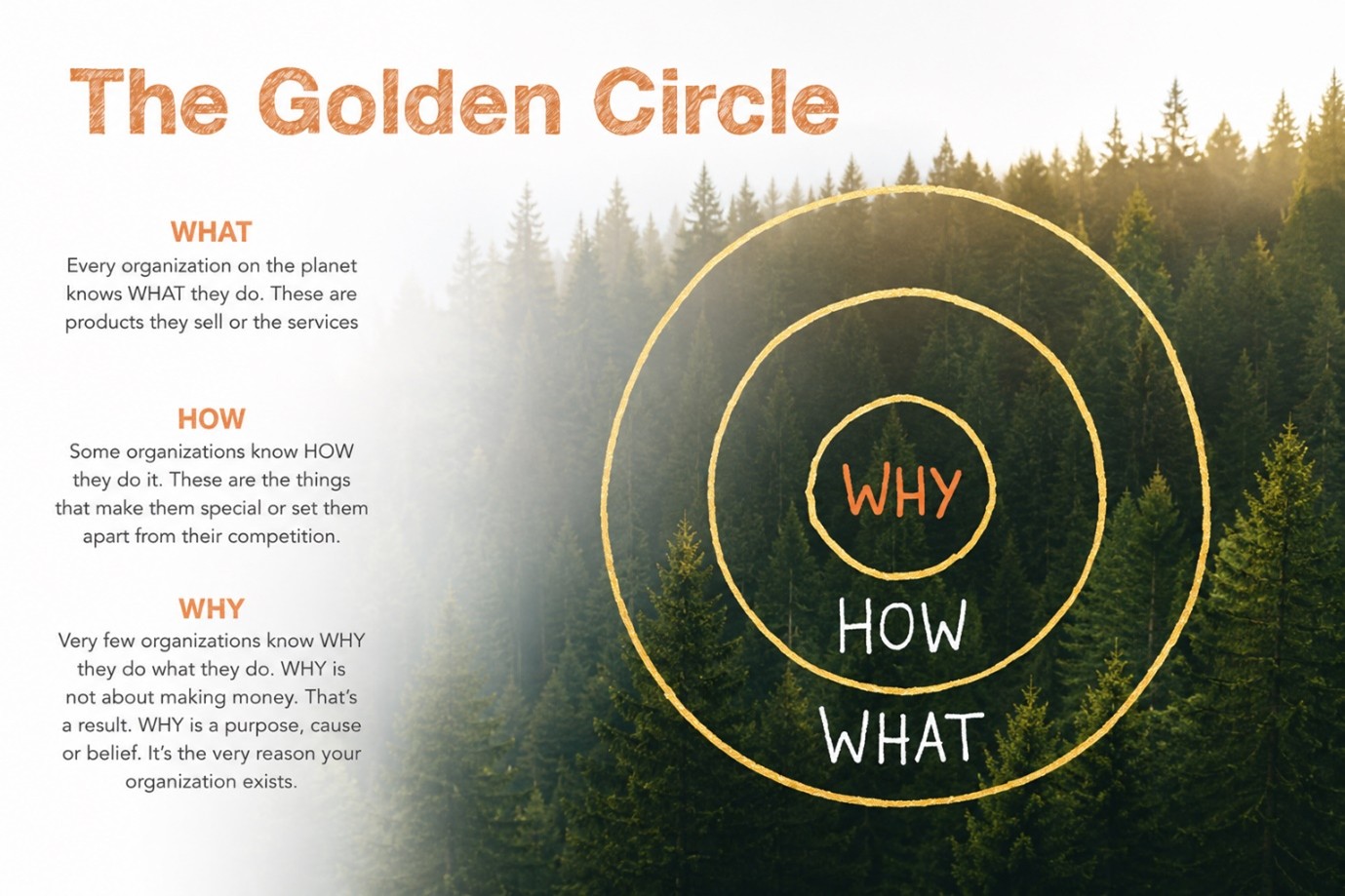
Why is sustainability important to your organization? Why does this new strategy align? Why this expansion? Why this new project? And I don’t mean tying it to lofty “the world needs more…” statements quoting the same statistics from UN publications that everyone is using.
I mean going deeper. As a firm, a leader, and even as an individual – why do you get out of bed in the morning to do this work?
Why Matters in Practice
I worked with one team that took for granted the excellent work they were doing around sustainability. Like the bullet points above – they could list numerous initiatives they were involved in and leading but initially struggled to articulate the reason behind them.
Once we unpacked that, everything else became easier.
Their integrated financial and impact thesis became clearer. Their positioning sharpened. And most importantly, everyone – from the foresters to analysts to financial controllers – could align around a common purpose they genuinely believed in.
The result wasn’t just stronger investor communication. It created ownership internally and helped build trust externally as they continued their capital raise.
The interesting part was that they saw enough value in the process that they began rolling it out across other asset classes within the business.
Start with Why in your Forest Investment Strategy
I help Asset Managers, forest businesses and NbS Developers accelerate their capital raise from impact investors – not by improving what they’re doing on the ground (they’re already good at that), but by helping them leverage that work so that it differentiates them.
When I work with clients in defining their impact strategy, we start with why. It’s not so simple as asking the question – it requires peeling back the layers to get to the root of what motivates the what and the how that is already happening. That why can become the difference between two otherwise similar opportunities competing for capital.
If you are developing a new forest investment strategy, and you think you could use some support in extracting your why, let’s have a conversation. And if you’re curious, you can read My Why here.
Did you like this article? Sign up now for the ForestLink’s newsletter, where you’ll receive technical advice, reflections, and best-practice guidance to support you with your forest-linked investment strategy or business straight to your inbox.