The natural capital race is on, and the winning horse is looking like…
The natural capital race is on.
What started as a few TIMOs staking claim to the term a few years ago has snowballed into a full-fledged over-haul of the asset class – in more than name alone.
And this is coming up everywhere in my work.

Photo by Florin Beudean on Unsplash
I just recorded a podcast with the talented Genevieve Bennett from Forest Trends’ Ecosystem Marketplace regarding their recent publication, State of Private Investment in Nature, 2026, which they co-authored with The Nature Conservancy. We discussed, and the report highlights, that Natural Capital is more than rebranding. The evidence shows that asset managers are stacking natural capital revenue streams that (no surprise) are dominated by traditional timber and agriculture return drivers, are materially considering nature risks and building all of this into their underwriting. What this also requires is bringing in the talent to be able to manage for what is now more than purely timber optimization. Watch for the episode, that will come out next week.
I also saw the announcement, and immediately signed up for the webinar, where the Capitals Coalition will be releasing their Global Forestry Natural Capital Report, the result of an 18 month Natural Capital project with the International Sustainable Forestry Coalition, where the project aims to establish a unified framework for Natural Capital Accounting and Reporting across the sustainable forestry sector. Yes of course, timber is included –how to account for this is well known, carbon is getting there, but what about the others (identified by the stakeholders as): water, habitat and biodiversity, air, and recreation and culture?
Also, recent conversations with clients and other colleagues from across the globe have led to the question, which in so many words can be phrased as:
“Which natural capital horse should we bet on?”
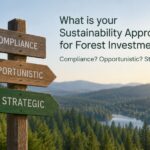
If you are an asset manager looking to build diversification, revenue streams, impact streams, and investment capital profiles into your investment product offerings through embracing the natural capital evolution of the timberland or forestry asset class, this is a question you will likely have asked yourself. Of course – there is no short answer. It’s not about looking at the latest market data or transaction history (this is weak or non-existent), it is about looking at the risks and opportunities in your investment jurisdictions, what is needed to make your forest assets themselves and the financial returns more resilient and making deliberate decisions that make sense.
If you’re currently navigating these questions, book a quick call if you’d like to see how I’m helping asset managers, forest businesses and NbS project developers take the leap into natural capital smartly.
Did you like this article? Sign up now for the ForestLink’s newsletter, where you’ll receive technical advice, reflections, and best-practice guidance to support you with your forest-linked investment strategy or business straight to your inbox.